
Share Locksley G.E. Edmondson's obituary with others.
Invite friends and family to read the obituary and add memories.
Stay updated
We'll notify you when service details or new memories are added.
You're now following this obituary
We'll email you when there are updates.
Select your format and elements to print

IN LOVING MEMORY OF Locksley G.E. Edmondson
Locksley G.E.
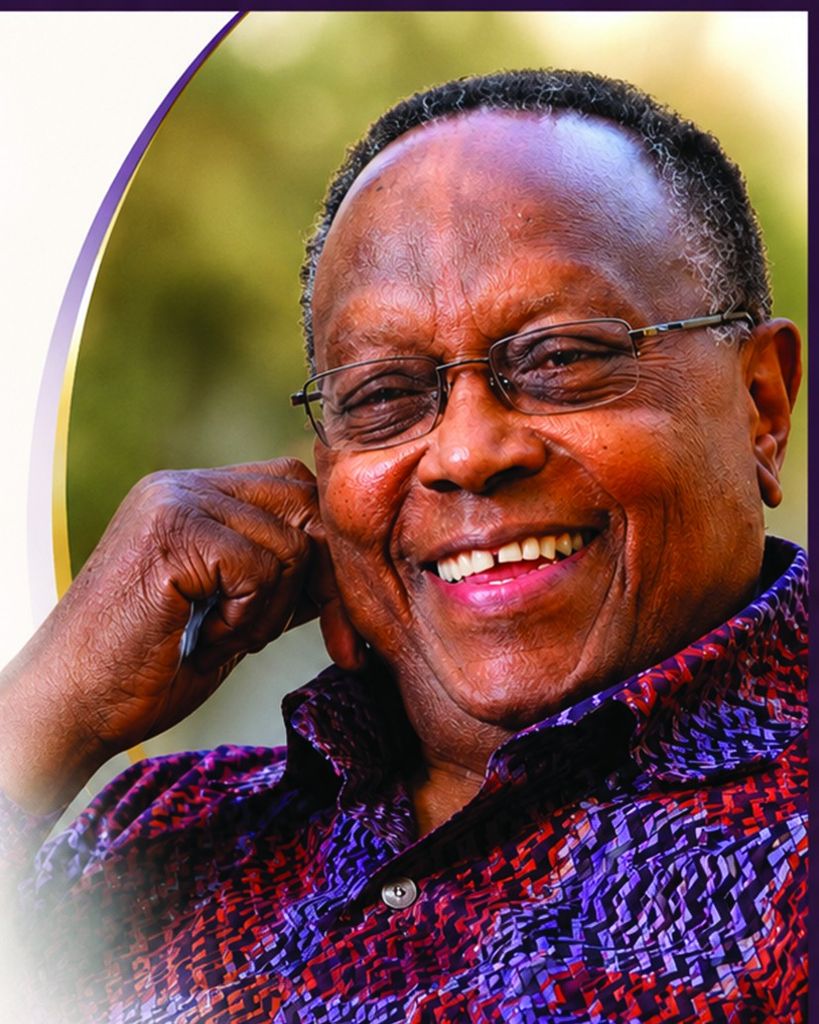
Edmondson
Apr 12, 1934 — Aug 18, 2026
Ithaca
Locksley G.E. Edmondson's Obituary
Locksley Edmondson, an influential Jamaican scholar of International Relations whose career spanned over five decades across several countries, died on August 18 in Ithaca NY. He was 92.
He leaves behind wife, Elizabeth, children Georgette (“Nona”) (Nate), Belinda, Magnus, Alisha; grandchildren Ali (Emma), Amanda, Ravi and Dorian; great granddaughter Eloise; sisters, Hermione, Patricia, Charmaine and Lisa; and brothers Winston (Louise), Michael, Andrew (Lavonne). Both his son Christopher as well as sister Norma died in 2016.
Born in the rural parish of Clarendon to schoolteachers Stanford and Olga, his parents impressed upon young Locksley that education should be his primary focus. Stanford insisted that Locksley and his sister Norma begin their daily Latin lessons at 5 am each morning by the bust of Lord Byron in the living room. Stanford himself was a powerful example of what education could do: he raised himself from poverty in St. Thomas—which, as Locksley would note in later years—was Jamaica’s poorest, Blackest, and most rebellious parish, to become Jamaica’s Superintendent of Schools; and, later, an Anglican minister who composed hymns.
Locksley attended the prestigious Jamaica College in Kingston, which schooled a generation of Jamaican leaders and scholars, including prime ministers Norman and Michael Manley, authors Neville and Kwame Dawes, and cultural theorist Stuart Hall. Even among such company Stanford’s 5 a.m. lessons paid off handsomely: Locksley carved out a name for himself as an excellent student of Latin, earning the sobriquet Flaccus, after the Roman poet.
After a stint working in Kingston, Locksley moved to England in the late 1950s to complete his undergraduate degree at the University of Birmingham, specializing in Political Science, Economics and Sociology, graduating with honors. It was at Birmingham that Locksley met other Commonwealth students from Africa and Asia. He was introduced to the anticolonial political discourses such as Marxism and Pan Africanism that were shaping the independence movements of Jamaica and the rest of the colonial world, discourses that would inform his later scholarship as a professor.
He was also introduced to British-style racism. After suffering numerous rejections, Locksley found one promising advertisement for lodging that specifically requested a Black male tenant: to deter the neighborhood thieves. During this time Locksley found common cause with his Irish co-workers in the glass 1 factory where he worked part-time to pay for his education. Their experience of British imperialism mirrored his own. On Locksley’s 70th birthday he finally got to fulfill his boyhood desire to see Ireland, and ever after was fond of listening to the Three Irish Tenors and eating Irish porridge.
Locksley moved to Canada to pursue his doctorate in Political Science at Queen’s University, conducting research at the Schomburg Library in New York city as he completed his thesis on the U.S. civil rights movement. Locksley accepted an offer from the University of Waterloo to become the first Black professor of the fledgling Department of Political Science there. During his time in Canada he had three more children: Christopher, Nona and Belinda. In 1967 he was awarded a Rockefeller Fellowship to become a visiting professorship at Makerere University in Uganda, an experience which would transform his life. At Makerere Locksley became close friends with the luminaries of the Pan Africanist independence movements of Africa and the Caribbean, including C.L.R. James, Ali Mazrui and Ngugi wa Thiong’o.
In 1970 Locksley joined the Department of Government at Cornell University, where he became fast friends with James Turner, the founder and director of the newly-formed Africana Studies & Research Center, the first center of its kind in the United States to center the African diaspora. His friendship with James would also transform his personal and professional life; in Africana Studies he recognized his life’s work, and in his second tenure at Cornell in 1983 he joined the department, where he would remain until he retired in 2016, himself becoming its director from 1991 to 1996.
Despite his ascent in the American academy, Locksley still longed to be a part of the nation-building movements of the post-independence societies of the Caribbean. So in 1973 he returned to Jamaica to join the faculty of the Department of Government at the University of the West Indies at Mona, where he stayed until 1981, lecturing and building innovative programs during his tenure as Dean of Social Sciences. He was a member of a cohort of UWI intellectuals who advised Prime Minister Michael Manley during the turbulent yet heady nationalism of the 1970s.
A Pan Africanist firmly committed to the freedom of Black societies worldwide, Locksley was expansive by nature. He read voraciously, and loved to quote from a wide range of intellectuals, from iconic African American scholars like W.E.B. DuBois to the groundbreaking Jewish scholar of totalitarianism, Hannah Arendt. But he was not an intellectual snob: he also liked to read The National Enquirer. Read everything, he would counsel his children, before you make a judgement.
A Jamaican to his bones, he loved big Jamaican breakfasts, cricket, Usain Bolt, Shakespeare soliloquies, and belting out Anglican hymns. He was a great orator, a sought after speaker for professional events and for every single family wedding. He loved jazz, particularly Billy Eckstine and “sassy” Sarah Vaughn. Locksley was a profoundly tolerant man who disliked intolerant people. He was a legendary teacher who trained generations of scholars after him. He was a ferocious debater, a loving father, a doting grandfather, and a great friend. He will be missed by everyone who knew him..
A visitation will be held on Friday, September 4th, 2026, from 4-6pm at Bangs Funeral Home in Ithaca, NY. A service will be held Saturday, September 5th, 2026, at 2pm at St. John's Episcopal Church in Ithaca, NY.
Funeral Services for Locksley G.E. Edmondson
Visitation

Friday
Bangs Funeral Home
4:00 - 6:00 pm (Eastern time)
Funeral Service
Saturday
St. John's Episcopal Church
2:00 - 3:00 pm (Eastern time)
Locksley G.E. Edmondson's Guestbook
Visits: 727
This site is protected by reCAPTCHA and the
Google Privacy Policy and Terms of Service apply.
Service map data © OpenStreetMap contributors